Prophet & President
Joseph Smith
Prophet and President of The Church of Jesus Christ of Latter-day Saints and mayor of Nauvoo. He was jailed at Carthage and killed in the attack on June 27, 1844.
June 1844. A growing crisis. The final days of Joseph and Hyrum Smith. Follow the events of the Martyrdom—and examine the evidence for yourself.
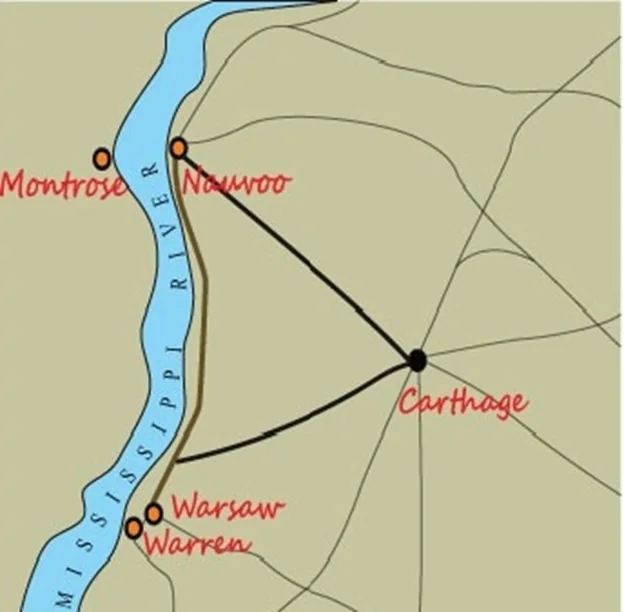
Nauvoo, Warsaw, and Carthage form the geographic center of the story.
The Nauvoo Expositor appeared on June 7, 1844. Its single issue became the immediate spark in a crisis already years in the making.
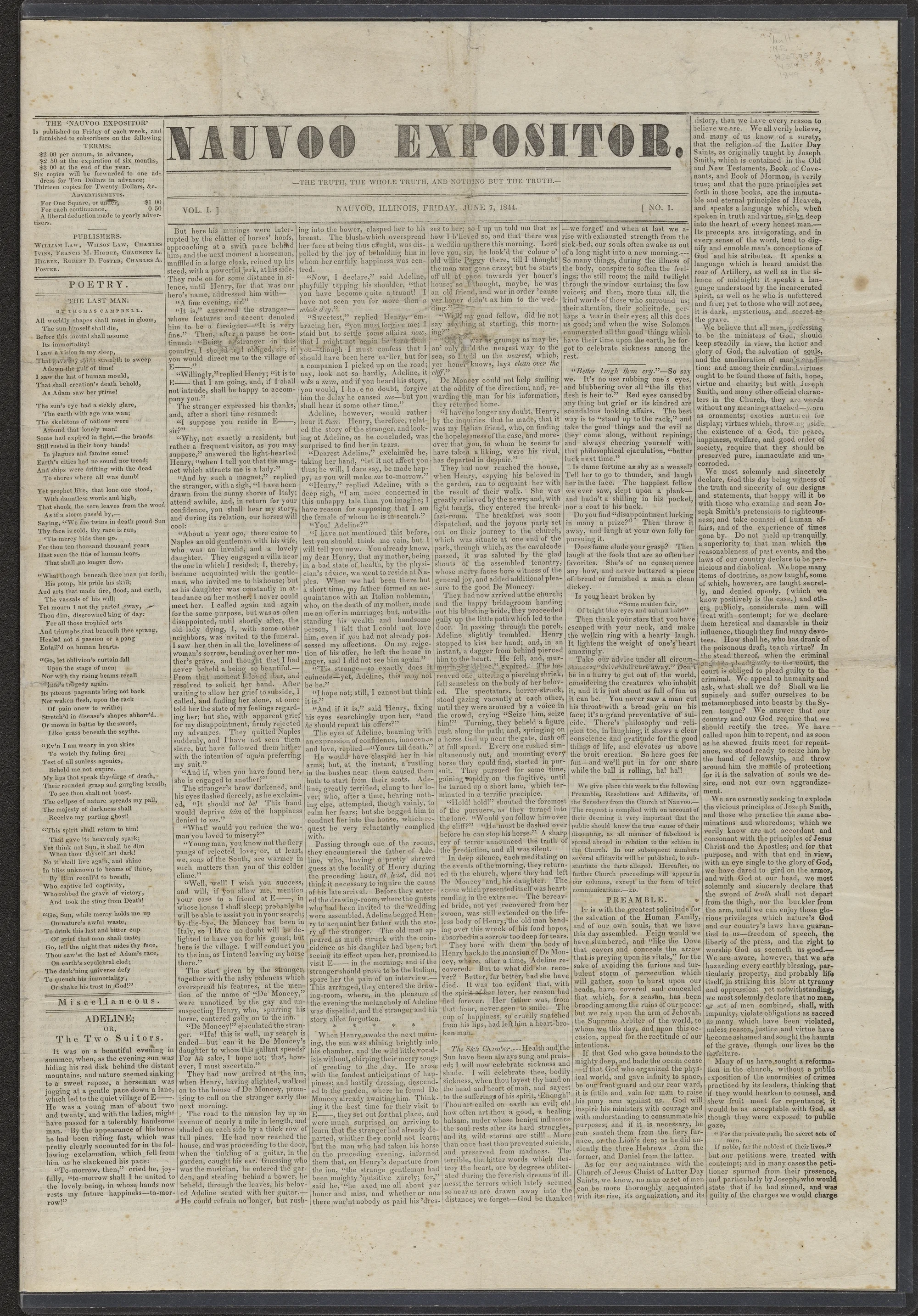
The paper said that the Book of Mormon was true and that Joseph Smith was once a true prophet but had fallen from grace. It called for the repeal of the Nauvoo Charter and for mobs to attack the city. It also contained libelous charges.
On June 10 the Nauvoo City Council declared the press a public nuisance and ordered it removed by the City Marshall. The destruction of the press accelerated the crisis.
Joseph and Hyrum went to Carthage to answer the charges against them. By June 25 they were confined in Carthage Jail on a treason charge.
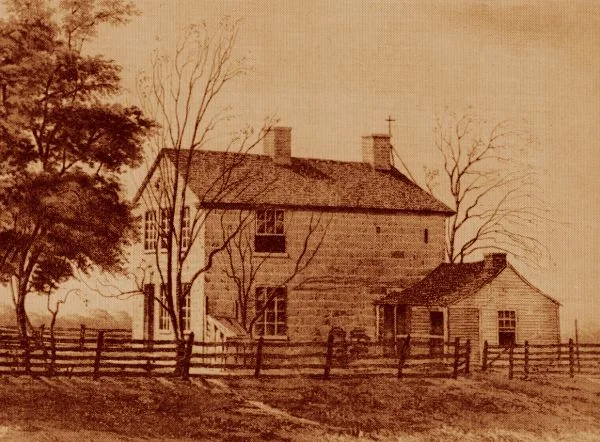
Joseph and Hyrum arrived in Carthage near midnight on June 24. The next day they appeared on the riot charge connected with the destruction of the Nauvoo Expositor and posted recognizance. They were then charged with treason for enacting one night of martial law in Nauvoo and were committed to jail because the charge of treason did not permit bail.
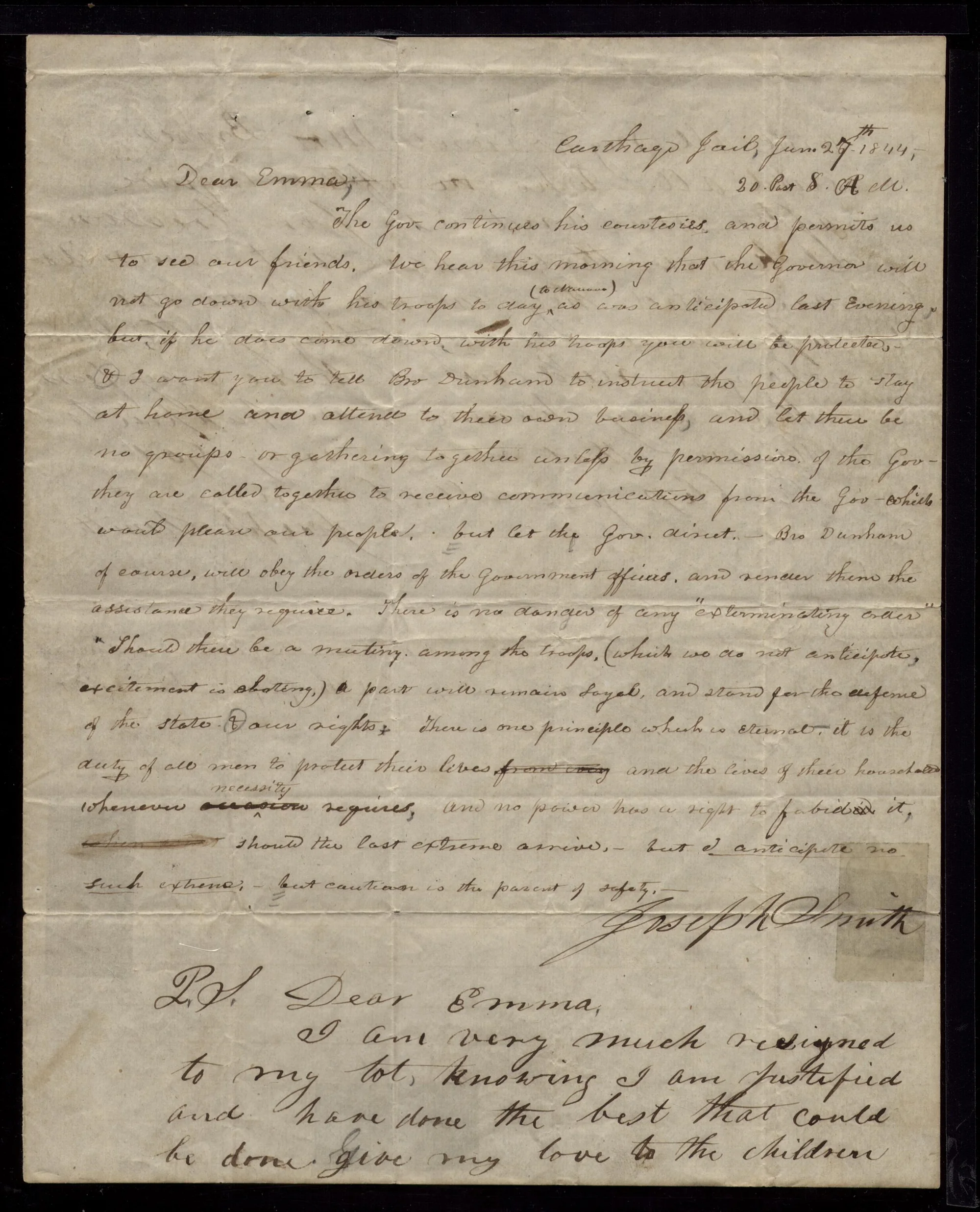
On June 26 they met with Governor Thomas Ford, who repeatedly promised the protection of the state. That night Dan Jones remained near Joseph in the jail and received the last prophecy to a person from Joseph, capping almost 400 prophecies Joseph had given.
Follow June 27 scene by scene. Click below to see the story, or choose any moment yourself.
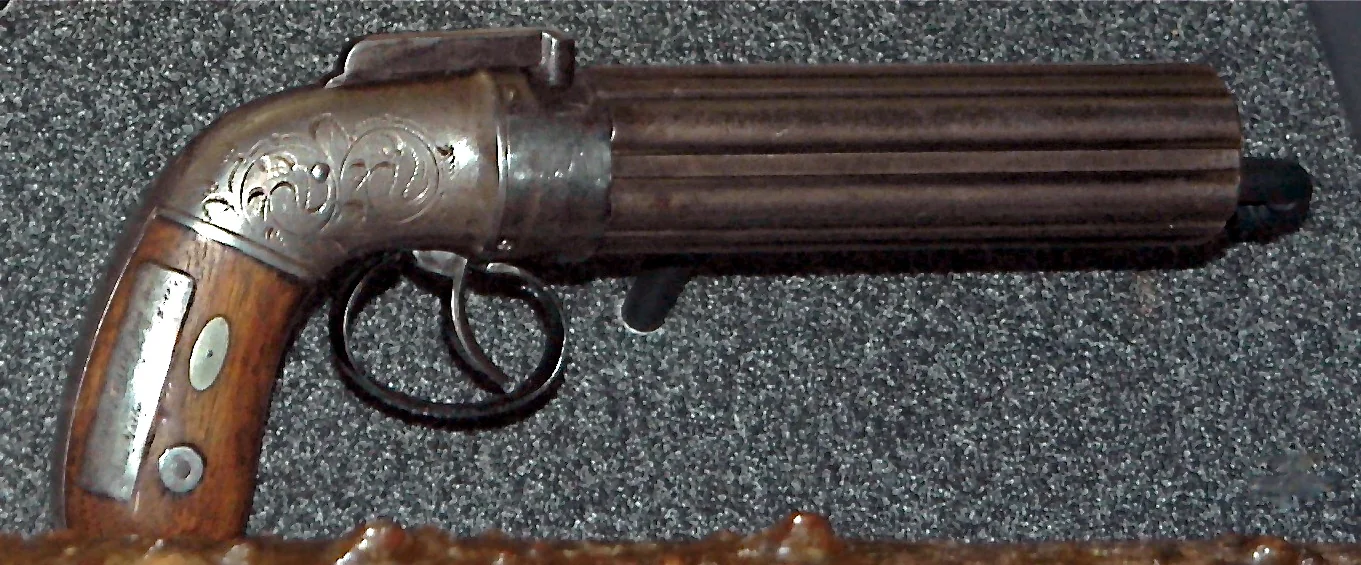
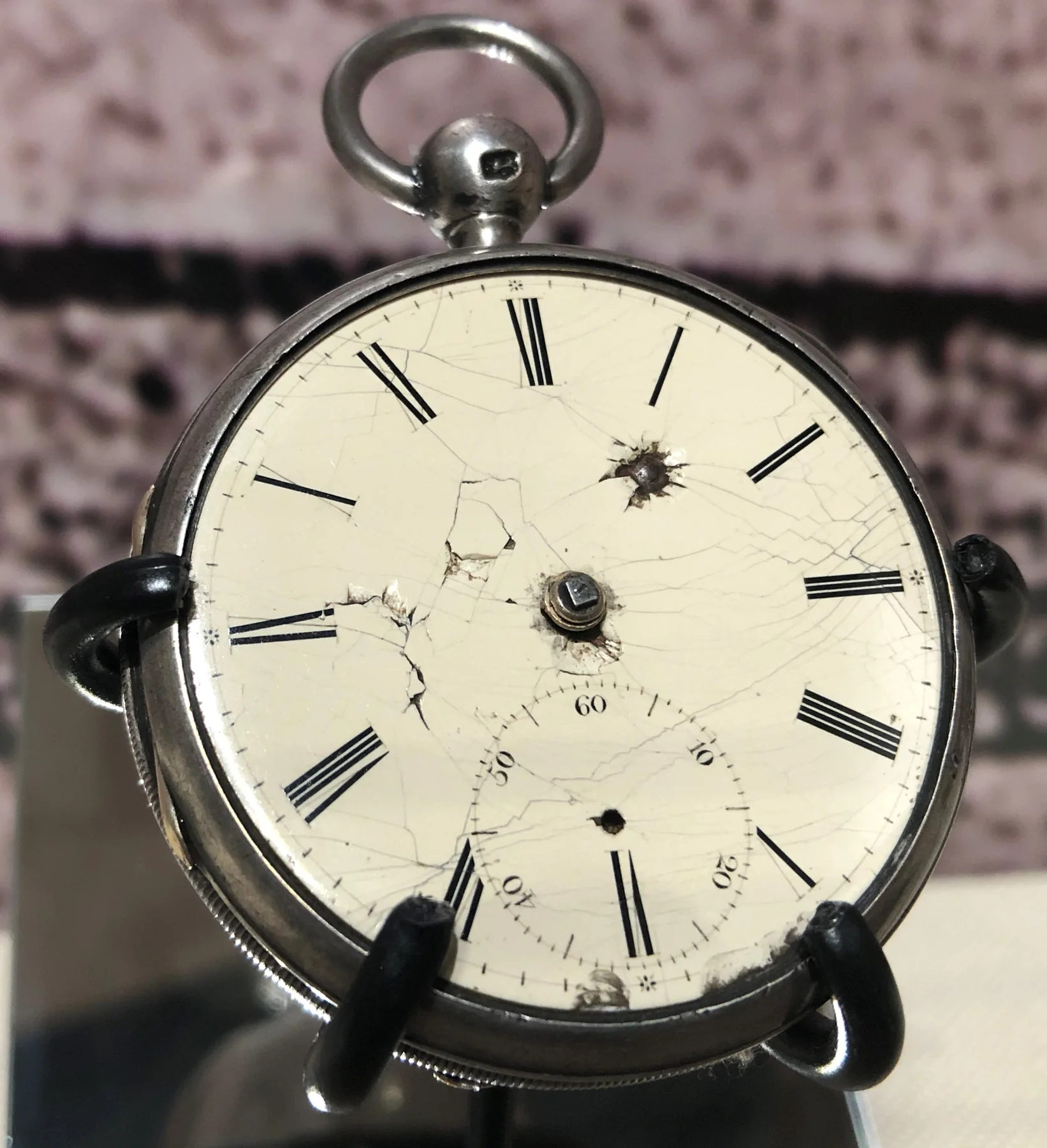
At Hyrum Smith’s request, John Taylor sings the hymn. Hyrum later asks him to sing it again.
The attack unfolds in minutes. The experience uses sound, pacing, eyewitness words, and surviving artifacts rather than graphic violence.
Start with 01, then click 02–05. Each numbered step changes the scene and evidence so you can follow Eliza Graham’s story in order.
The murders ended Joseph and Hyrum's lives, but not the crisis in Hancock County. The story continued through mourning, succession, indictments, trial, renewed violence, and exodus.
Their bodies are carried back to Nauvoo. Thousands mourn as the city receives the two brothers.
The tragedy did not end at Carthage Jail. Joseph and Hyrum's brother Samuel raced toward Carthage, was pursued by armed men, and died little more than a month later.
Samuel Harrison Smith, brother of Joseph and Hyrum and one of the Eight Witnesses of the Book of Mormon.
Samuel escaped a dangerous pursuit and reached Carthage physically exhausted. He helped Willard Richards care for Joseph and Hyrum's bodies and returned with them to Nauvoo the next day.
Soon afterward Samuel became seriously ill. His recorded cause of death was bilious fever. Family and later Church accounts connected the illness with the severe exertion, fatigue, and distress of the chase and its aftermath.
Samuel died July 30, 1844. In the Martyrdom Stories presentation, he is remembered as the third martyr of the Smith family tragedy.
May 1845. The courtroom in Carthage is packed. Five men stand trial for Joseph Smith's murder. Read the prosecution's charges. Read the defense. Then cast your own vote before the historical verdict is revealed.
The five defendants:
The state's argument: the defendants helped organize, lead, or carry out the movement that ended in the murders at Carthage.
The defense argument: public suspicion and hostility could not substitute for legal proof against these particular defendants.
Had the prosecution legally proved that these five defendants were guilty of conspiring to kill Joseph Smith?
Make your choice below to see the verdict!
All five defendants were acquitted.
The Martyrdom story involved religious leaders, family members, witnesses, political officials, newspaper editors, militia officers, and defendants. Here are the principal people encountered in this interactive page.
Prophet and President of The Church of Jesus Christ of Latter-day Saints and mayor of Nauvoo. He was jailed at Carthage and killed in the attack on June 27, 1844.
Joseph’s older brother and Patriarch to the Church. He voluntarily accompanied Joseph to Carthage and was the first of the brothers killed in the upstairs jail room.
Member of the Quorum of the Twelve Apostles who was in the jail with Joseph and Hyrum. He sang “A Poor Wayfaring Man of Grief,” was badly wounded in the attack, and survived.
Church leader and close associate of Joseph Smith who remained in the jail room during the attack. He escaped with only a slight wound to his ear, fulfilling an earlier prophecy from Joseph Smith that bullets would fly around him like hail yet leave no hole in his garment. Richards later left an important eyewitness account of the murders.
Welsh Latter-day Saint who stayed near Joseph in Carthage and carried a request for legal help on June 27. He received the last prophecy Joseph Smith gave to a person and later became one of the greatest missionaries of the Restoration, leading a remarkable missionary work in Wales.
Joseph Smith’s wife and mother of his children. Joseph wrote to her repeatedly during the final days, including letters from across the Mississippi River and from Carthage.
Joseph and Hyrum’s brother and one of the Eight Witnesses of the Book of Mormon. He rode toward Carthage on June 27, was pursued by armed men, and died on July 30 after weeks of declining health. He became the third martyr.
Editor of the anti-Mormon Warsaw Signal and a leading opponent of Joseph Smith. He helped rally opposition in Warsaw and later stood trial with four others for conspiracy to murder Joseph Smith. Sharp later served three terms as mayor of Warsaw. In declining health, he spent his final years in a wheelchair. He is buried about one mile north of Carthage Jail.
Leader of the Carthage Greys. Worrell sent a message to Thomas Sharp and the Warsaw mob at Golden’s Point saying, “Now is the time to do the deed,” referring to storming Carthage Jail. Just over a year later, on September 16, 1845, Worrell was shot and killed by Orrin Porter Rockwell, who had been deputized by Sheriff Jacob Backenstos. After ordering Worrell and the men with him to halt, the sheriff directed Rockwell to fire. It was Rockwell’s first confirmed kill. Rockwell later said that he never killed a man who did not deserve to die.
Governor of Illinois during the crisis. He dealt directly with Joseph and Hyrum, promised state protection, and ordered part of the Warsaw force discharged on June 27. He died only a few years later in 1850, destitute and in declining health—a broken man by the end of his life.
Eighteen-year-old waitress at the Warsaw House in 1844. At the 1845 murder trial she testified about Thomas Sharp’s return, the men who came for supper, wounded men, and statements she heard that night.
Colonel of the 59th Regiment of the Illinois militia and one of the five men tried in May 1845 for conspiracy connected with Joseph Smith’s murder. He was acquitted.
Prominent Hancock County anti-Mormon and one of the five defendants tried for conspiracy in Joseph Smith’s murder. The jury returned a verdict of not guilty. He later moved west to Tucson, where he became the city’s first American alcalde, or mayor, and remained active in territorial politics. He died there in 1873, broke and leaving an illegitimate child.
Illinois politician and militia figure who was among the five defendants. Eliza Graham remembered Davis making a statement at the Warsaw House after the killings; he was later acquitted.
One of the five men tried in 1845. Eliza Graham testified that she remembered Grover claiming he had killed Joseph Smith; the jury ultimately acquitted him.
Visitors who want the story can keep moving. Visitors who want the evidence can go deeper here.
Letters, journals, warrants, court records, and contemporary accounts.
Open collection →The Nauvoo Expositor, the Warsaw Signal, and the printed war of words.
Read sources →Interviews and discussions gathered on the museum's Podcast page.
View all videos →Research papers, maps, biographies, and Hancock County source material.
Explore collection →Click the links below to watch the associated videos.
Explore the people, documents, places, and testimony surrounding the deaths of Joseph and Hyrum Smith.